
Europe’s Peace Project at a Strategic Crossroads — Why Türkiye Matters
Istambul, April 26, 2026
After spending decades working to bring Türkiye and the European Union closer together, I followed with concern the recent remarks of Ursula von der Leyen placing Türkiye in the same geopolitical category as Russia and China.
Such comparisons risk oversimplifying a far more complex reality.
Türkiye is a long-standing NATO ally, an EU candidate country, and a partner that has, for decades, contributed to Europe’s security, economic integration, and regional stability. At a time when Europe faces profound geopolitical challenges, it is essential that strategic assessments reflect these facts and avoid narratives that may unintentionally undermine cooperation.
The European Union has often been described as “mankind’s greatest peace project.”
This is not merely rhetoric. It reflects a historic achievement: transforming a continent once defined by conflict into one shaped by cooperation and shared prosperity.
Yet today, that project is under growing pressure.
The consequences of the war between Russia and Ukraine have reshaped Europe’s security landscape. Energy policy has become a matter of strategic urgency. Enlargement policy is being reconsidered under geopolitical constraints. And in the Balkans, persistent fragility continues to test the limits of European engagement.
At such a moment, a legitimate question emerges:
Can Europe fully deliver on its strategic ambitions without a deeper partnership with Türkiye?
From Accession Framework to Strategic Reality
For many years, Türkiye–EU relations were primarily defined through the accession process—structured, technical, and at times transactional.
While that framework retains its importance, it no longer captures the full scope of today’s realities.
Türkiye now plays a central role across multiple domains that are critical for Europe:
•Energy diversification
•Migration management
•Defense and security cooperation
•Regional stability across Southeast Europe and beyond
•Supply chain connectivity
In each of these areas, Türkiye is not simply a counterpart—it is a key enabler.
Geography is an undeniable factor. A significant share of the energy resources Europe seeks to access are located in regions connected through Türkiye. Infrastructure such as the Trans-Anatolian Natural Gas Pipeline and the Southern Gas Corridor illustrates how interdependence has already become a reality.
This is not only about transit routes.
It is about Türkiye’s role as a strategic hub linking regions that are increasingly central to Europe’s economic and security interests.
The Balkans and the Need for Coordinated Engagement
The Balkans remain a critical test case for Europe’s ability to translate commitment into lasting stability.
Despite substantial financial support and institutional engagement, the region continues to experience political volatility and structural challenges. Recent developments in countries such as Bulgaria and Romania underscore the importance of sustained, coordinated efforts.
In this context, Türkiye’s contribution should be seen as complementary rather than competitive.
With longstanding ties across the region, Türkiye has supported economic integration, infrastructure development, and diplomatic engagement. Aligning these efforts with broader European strategies can enhance overall effectiveness.
The key question is not whether Europe or Türkiye should lead.
It is how both can work more closely to ensure that stability is maintained and strengthened.
Moving Beyond Perceptions
It is also important to acknowledge that perceptions have, at times, complicated Türkiye–EU relations.
Debates about identity and belonging—whether explicit or implicit—have occasionally overshadowed strategic considerations.
At a time when Europe faces complex internal and external challenges, it is worth reassessing whether such debates serve the Union’s long-term interests.
Experience suggests that engagement fosters understanding. Where there is interaction, there is often greater appreciation of shared interests and values.
A forward-looking relationship requires moving beyond inherited assumptions toward a more pragmatic and inclusive perspective.
From Transactional Cooperation to Strategic Partnership
In recent years, cooperation between Türkiye and the EU has often been driven by immediate needs—particularly in areas such as migration and crisis management.
While these efforts have been important, they should not define the entirety of the relationship.
There is scope—and indeed a need—for a more structured and strategic approach:
•Advancing the modernization of the Customs Union
•Deepening cooperation in energy security and defense
•Enhancing coordination in the Balkans and neighboring regions
•Reinvigorating political dialogue through credible and predictable mechanisms
Such steps would not only strengthen bilateral relations but also contribute to Europe’s broader strategic resilience.
A Shared Strategic Responsibility
The European Union today faces a more demanding global environment—one defined by competition, uncertainty, and shifting balances of power.
In this context, partnerships are not optional. They are foundational.
Türkiye has demonstrated its capacity to act with resilience and strategic autonomy. It has continued to engage with Europe even during periods of difficulty and divergence.
Türkiye will remain a consequential actor with or without progress in its EU process.
At the same time, it is increasingly clear that Europe’s ability to address its strategic challenges—from energy to security to regional stability—benefits significantly from close cooperation with Türkiye.
This is not a question of dependency, but of mutual strategic interest.
The issue is therefore not whether Türkiye will remain relevant to Europe.
It is whether Europe will choose to fully leverage that partnership.
If the European Union seeks to preserve and strengthen its role as a force for stability and peace,
It will need partners that can contribute meaningfully to that vision.
Türkiye is one of those partners.
Recognising this reality—and acting upon it—would serve not only Türkiye’s interests, but Europe’s as well.
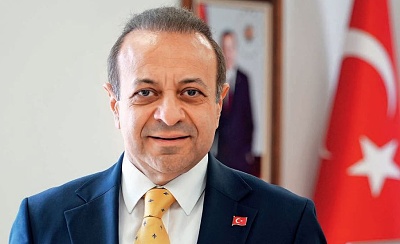
Author by Ambassador EGEMEN BAĞIŞ, PhD Former EU Minister and Chief Negotiator of Türkiye